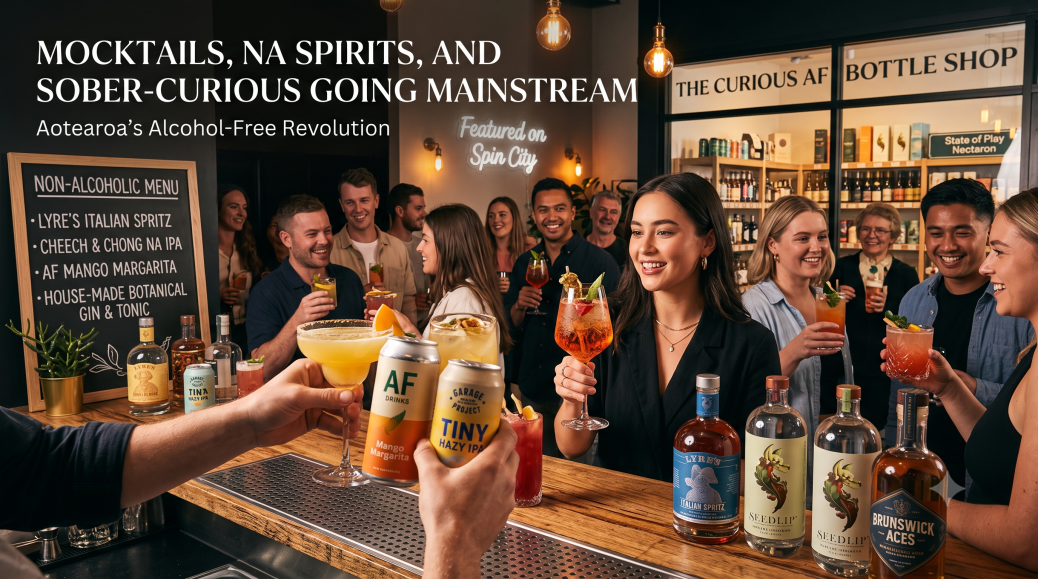
The aisle that used to hold three sad bottles of alcohol-free chardonnay and a stack of soda water has become one of the most interesting sections in any modern bottle shop. The sober-curious movement that started as a wellness-blog buzzword has matured into a full retail category, with sophisticated zero-alcohol spirits, properly engineered NA beers, and mocktail menus across both sides of the Tasman. Understanding what changed makes the difference between a polite social workaround and an actually enjoyable evening.
How the Shift Went Mainstream
The numbers behind the trend are no longer subtle. The global zero-alcohol spirits market reached USD 1.02 billion in 2024 and is on track for USD 3.13 billion by 2033, growing at 14.8% per year. The Asia-Pacific region, which includes Australia and New Zealand, is the fastest-growing market at 18.1% annually. The shift has been driven by Millennials and Gen Z prioritising wellness, sleep quality, and the recognition that the weekend hangover is not a fair trade for Saturday night. The cultural shift extends well beyond drinks. People who have cut back on alcohol are filling the same weekend time with home cocktail-making, streaming, longer walks, fitness classes, and casual online gaming. The online lobby at Spin City casino, with a rich slots library, is one slice of that wider at-home leisure mix, along with everything else that now fills the evenings that used to start with a bottle being opened. The point is not that one habit replaces another, but that weekend leisure has rearranged itself around an audience that no longer treats drinking as the default backdrop.
What’s Actually on the Shelf Now
The technical quality of the products has caught up with the marketing. A short tour of what a modern bottle shop’s alcohol-free section now stocks:
- Premium NA spirits like Lyre’s, Seedlip, and Brunswick Aces that mix into proper cocktail recipes without tasting like flavoured water.
- Craft NA beers from local brewers including Garage Project TINY, State of Play, Behemoth, and Sawmill Bare.
- Heineken 0.0 and other major-label zero-percent options now appearing on draught in some Auckland bars.
- NA wine and sparkling, including New Zealand brands developing dealcoholised sauvignon blanc.
- Pre-mixed mocktails in cans from brands like AF Drinks, which built the category locally.
- Functional drinks with adaptogens or nootropics that mimic the social ritual without alcohol.
The quality range is wide. Some of the early NA beers tasted like flat carpet water, but the better ones are now indistinguishable from their alcoholic counterparts in blind tastings. The same is true of the spirits category: a good NA gin and tonic, made with a serious botanical base, holds up against the original in any setting where the conversation matters more than the buzz.
The Local Scene Worth Knowing About
The New Zealand market has carved out a distinctive position in the global alcohol-free shift, partly because the local craft beer scene was already strong enough to handle the technical challenge of brewing a zero-percent product that actually tastes like beer.
The Wellington and Auckland Anchors
Wellington’s Garage Project launched TINY around four years ago, and the brand now accounts for more than 20% of the brewery’s total output, a remarkable statistic for a craft producer with hundreds of recipes in its catalogue. State of Play in Hawke’s Bay went further and built the country’s first 100% alcohol-free brewery. Auckland’s Behemoth runs Cheech & Chong as a mainstay. The retail side made its biggest move when AF Drinks, founded by Lisa King in 2020, opened The Curious AF Bottle Shop in Ponsonby Central, the first dedicated alcohol-free retailer in Aotearoa.
| Producer | Origin | Standout Product | Format |
| Garage Project | Wellington | TINY Hazy IPA | NA beer |
| State of Play | Hawke’s Bay | Nectaron Unfiltered Hazy | NA beer |
| Behemoth | Auckland | Cheech & Chong | NA beer |
| AF Drinks | Auckland | Mango Margarita | RTD mocktail |
| Lyre’s | Sydney | Italian Spritz NA | NA spirit |
DB Breweries began trialling Heineken 0.0 on draught at Auckland’s Empire Tavern and Moretons in 2025, with plans to scale nationally if the pilot worked. Restaurant mocktail menus have moved from one apologetic option at the bottom of the list to genuine cocktail programmes built by the same staff who run the alcoholic menu.
What the Next Two Years Probably Look Like
The trend is no longer about a small group of teetotallers carving out a niche. The mainstream weekend now routinely includes someone at the table ordering a properly made mocktail or NA pint without anyone commenting on the choice. The category will keep expanding because the drivers are not temporary: younger consumers drink less, the wellness conversation is not slowing down, and the products have crossed the quality threshold that makes the choice enjoyable rather than a sacrifice. The most interesting question for the next two years is whether the alcohol-free spirits category will reach the same level of bar-stocking parity that NA beer has hit on tap, and whether the rest of the world catches up with what the Wellington brewers and Sydney distillers have already worked out.
