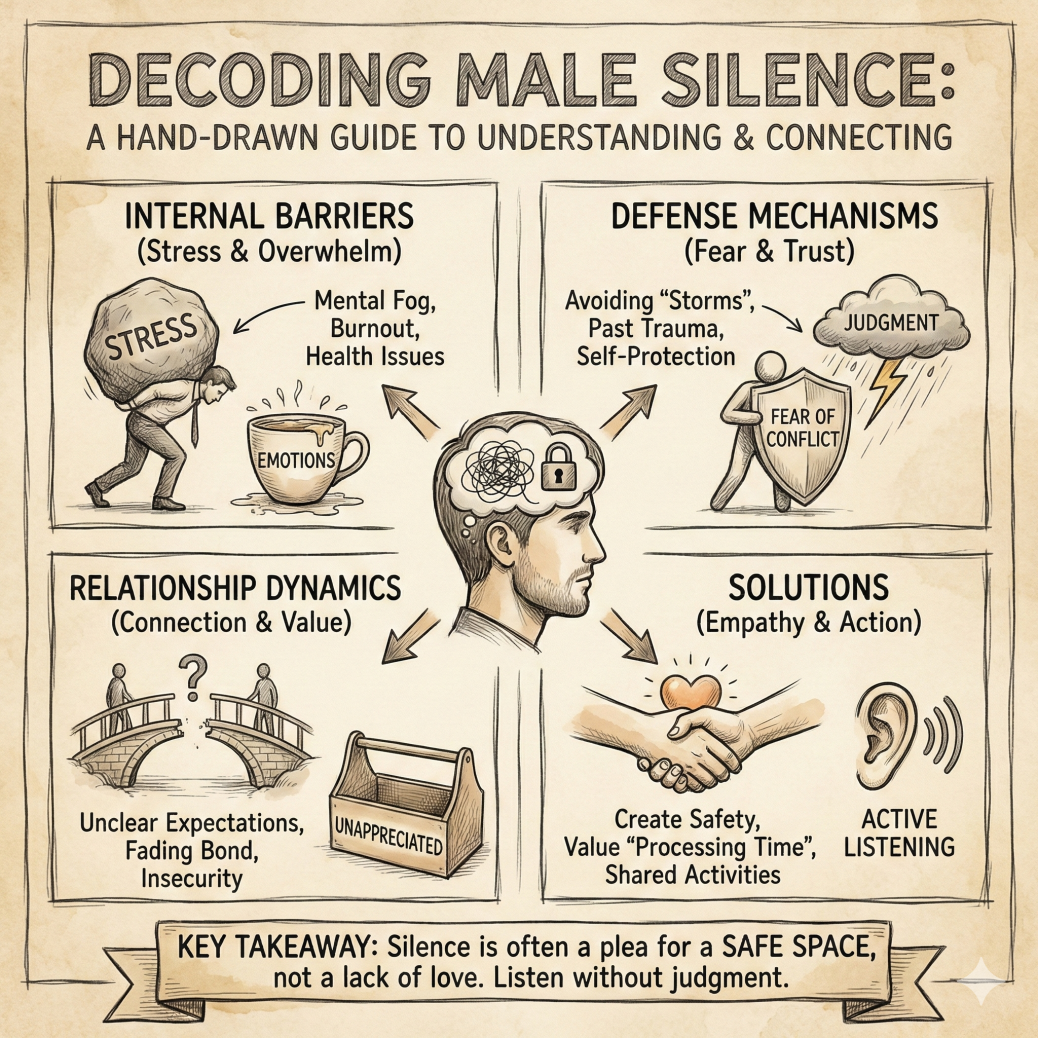
In relationships, silence can be louder than words. Understanding the psychology behind a partner’s withdrawal is the first step toward rebuilding a bridge of trust and open dialogue.
Key Takeaways for Improving Relationship Communication
- Identify the Root Cause: Withdrawal is often a symptom of external stress, fear of conflict, or emotional burnout rather than a lack of love.
- Create Emotional Safety: Men are more likely to open up in non-judgmental environments where vulnerability isn’t met with criticism.
- Value “Processing Time”: Many men need internal space to categorize feelings before they can verbalize them.
- Action Over Words: Sometimes re-establishing a connection through shared activities is more effective than forcing a “talk.”
1. Internal Barriers: Stress, Burnout, and Mental Weight
Often, a man’s silence has nothing to do with his partner and everything to do with his internal world. Modern life places heavy demands on men that can lead to emotional burnout.
- Personal Stress & External Pressure: Work, finances, and family obligations can create a “mental fog,” making deep conversation feel like an exhausting chore.
- Emotional Overwhelm: When feelings become too intense, some men retreat into silence to regain composure and avoid “flooding.”
- Physical & Mental Health: Chronic pain or undiagnosed anxiety can act as hidden barriers to expressive communication.
2. Psychological Defense Mechanisms: Fear and Trust
For many, silence is a “shield.” If a man feels that his words might be used against him or lead to a fight, he may choose the silent retreat as a safety measure.
- Fear of Conflict: He may avoid a discussion because he lacks the tools to navigate a potential “storm” without escalating it.
- Fear of Judgment: If he perceives a lack of trust or fears being misunderstood, he will withhold his true thoughts to protect his ego.
- Past Trauma: Lingering echoes from previous relationships or childhood can make vulnerability feel dangerous.
3. Relationship Dynamics: Insecurity and Appreciation
Communication is a two-way street. Sometimes the “broken bridge” is a result of the current relationship climate.
| The Barrier | How it Manifests | The Solution |
|---|---|---|
| Unappreciated Efforts | Feeling like a “provider” rather than a partner. | Express genuine gratitude for small actions. |
| Unclear Expectations | Confusion on “how” to help or talk. | Set clear, gentle goals for communication. |
| Loss of Connection | A fading bond where silence becomes the norm. | Prioritize quality time without “heavy” topics. |
The Art of Active Listening: Your Greatest Tool
“Sometimes silence isn’t a wall; it’s a plea for a safe space to land.”
When your partner is reluctant to talk, your reaction determines the next step. Active listening—paying full attention and reflecting his feelings without judgment—proves to him that it is safe to return from his retreat.
Frequently Asked Questions (FAQ)
What is the difference between “Processing Time” and the “Silent Treatment”?
Processing time is a temporary retreat to manage emotions with the intent of returning to the conversation. The silent treatment is a manipulative tactic used to punish or control a partner. If he says, “I need an hour to think,” that is healthy processing.
How can I get him to open up without nagging?
Switch the environment. Many men find it easier to talk while doing something else—like driving, walking, or cooking. Side-by-side communication feels less confrontational than face-to-face interrogation.
When should we seek professional help?
If the silence has lasted for weeks, involves total emotional withdrawal, or is paired with signs of clinical depression, a relationship counselor can provide the necessary tools to restart the dialogue.
Conclusion: Decoding male communication requires empathy and a shift in perspective. By recognizing that his silence is often a survival strategy rather than a lack of interest, you can foster a supportive environment that invites him back into the conversation.
